Afghanistan’s women are facing a mental health crisis, but help comes from 5,000 miles away.
Photography and Words by Chiraag Shah
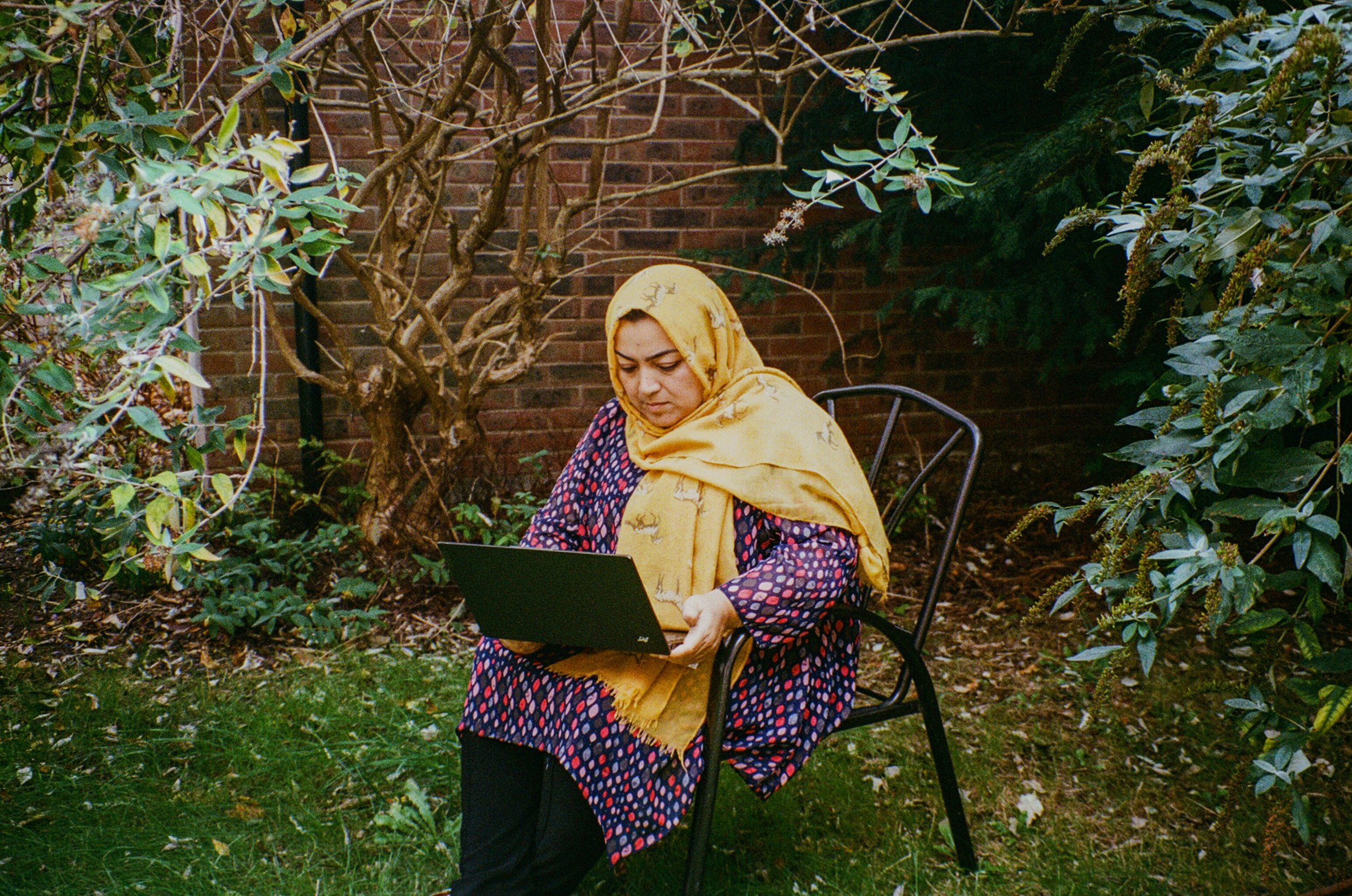
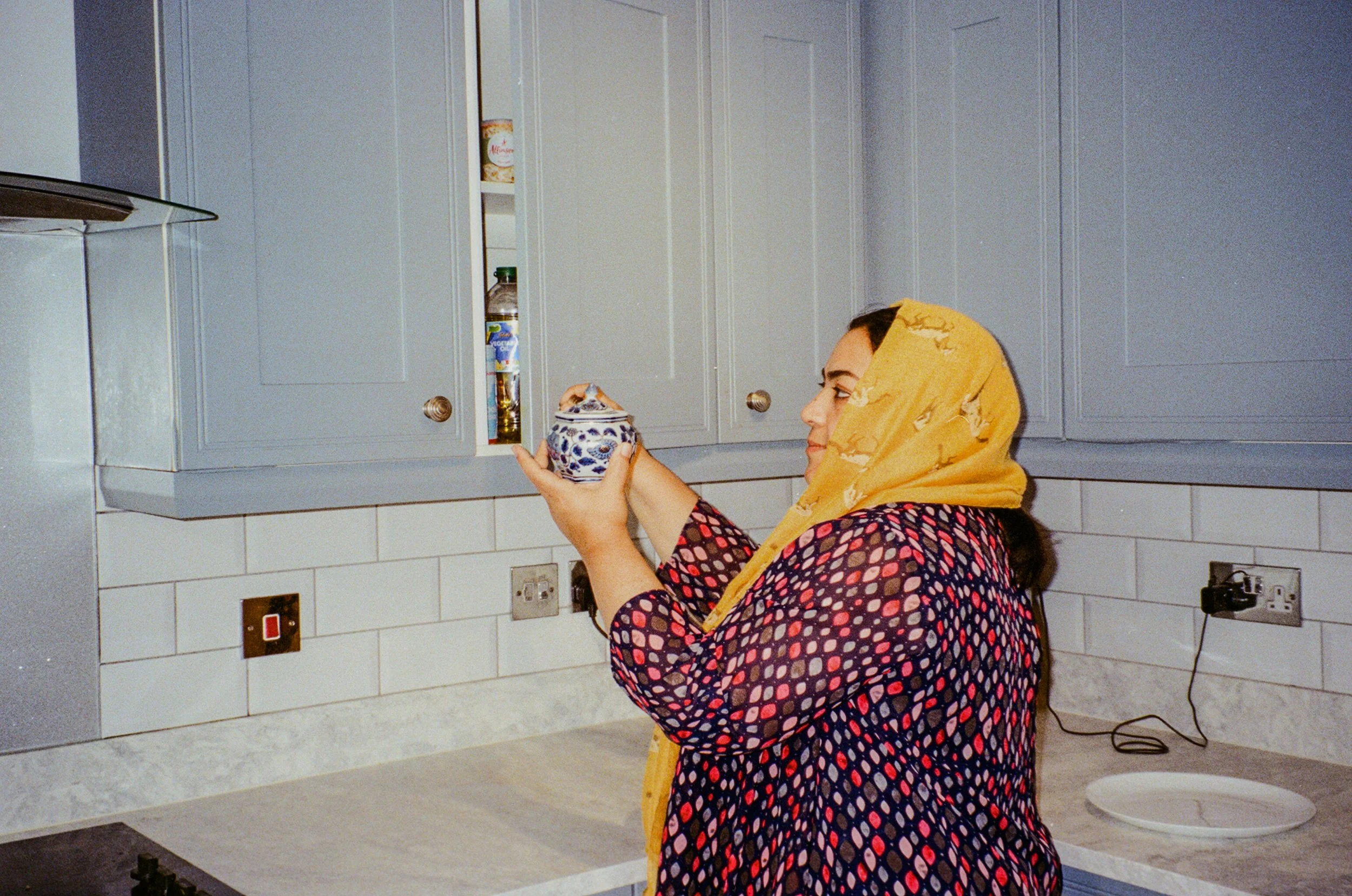
Every morning, before starting work, Batool Haidari goes for a walk to clear her thoughts and prepare for the day ahead. For the past month, this has been through the park that adjoins the rear of the temporary house she’s been staying in with her family. Batool is an Afghan asylum seeker who has been living in the UK since 2023. She is one of the writers of the Paranda group, whose collective memoir, My Dear Kabul, became a bestseller in 2024. And, she is one of a handful of psychologists offering remote counselling and therapy services to young girls in her home country of Afghanistan.
Before coming to the UK in 2023, Batool was a counsellor and therapist working at the Hazrat Mawla Ali Hospital in Central Kabul. As an outspoken advocate for women and LGBTQ+ persons’ mental health, her work often made headlines in Afghanistan’s national media; that same notoriety forced her to flee the country shortly after the Taliban’s takeover in 2021, amid concerns for her family’s safety.
Now, Batool continues her profession remotely, using video conferencing tools like WhatsApp and Zoom to circumvent Taliban surveillance and provide the assistance she can from 5,200 miles away.
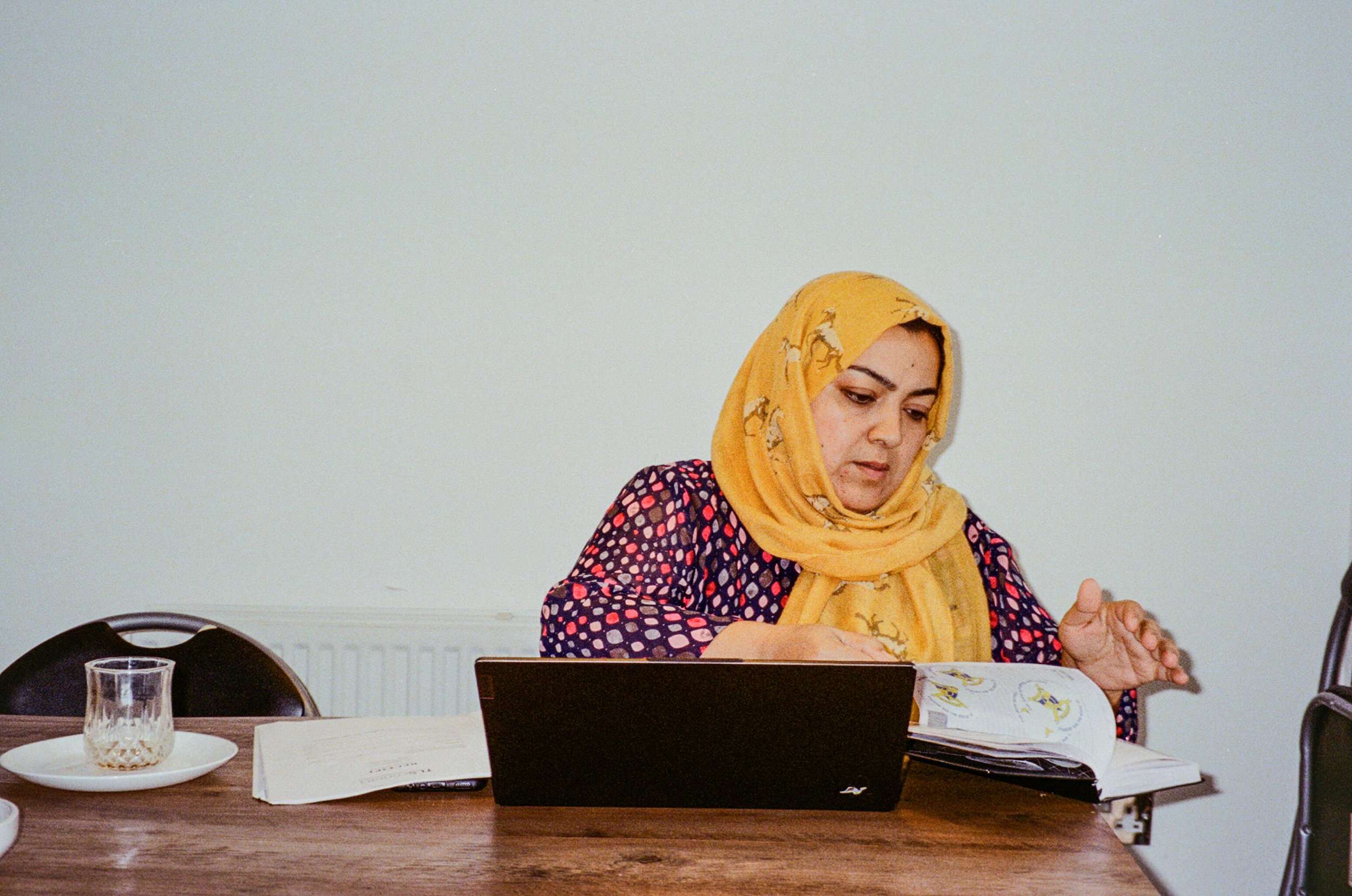
Access to mental health support in Afghanistan has long been limited by geographical, cultural, and economic barriers. Since the Taliban’s reinstatement in 2021, it’s become even harder to find professional support.
A recent report by Mahjooba Nowrouzi for the BBC revealed the direness of the situation. Under the supervision of Taliban officials, Nowrouzi visited the women’s wing of a mental health centre referred to locally as Qala (the Fortress). Run by the Afghan Red Crescent Society (ARCS), it is a place few speak of and even fewer visit. And yet, despite being one of the largest facilities in the country dedicated to helping women with mental illnesses, Qala struggles to cope with the modest 104 female patients within its walls. Operational capacity is constantly restricted by staff shortages, a lack of supplies, and misinformation.
The reason for this, Batool tells me, is the mass exodus of mental health experts that took place in the days and weeks following Kabul’s fall, which has resulted in a widespread shortage of professionals. Compounding that, a scarcity of shelters for women facing domestic abuse or abandonment is also driving many to seek refuge in struggling mental hospitals like Qala, overcrowding already swamped centres.
During her visit, Nowrouzi spotlighted the stories of women like Maryam, a formerly homeless domestic abuse victim who has been seeking refuge in the facility for nine years. Maryam is ready to leave, but she has nowhere to go; she cannot return to her abusive family, out of fear that they will simply abandon her again. Another is Habiba, a 28-year-old woman who was sent to the facility by her husband after he decided to remarry. Like Maryam, she too has nowhere else to go.
Recent cuts to foreign aid, like the withdrawal of USAID, which until recently had been crucial in propping up Afghanistan’s medical infrastructure, have compounded these difficulties to devastating effect.
Now, with resources sparse in the country, remote online sessions like the ones Batool offers have become one of the few safeguards preventing a total mental health crisis from emerging amongst Afghanistan's female population.
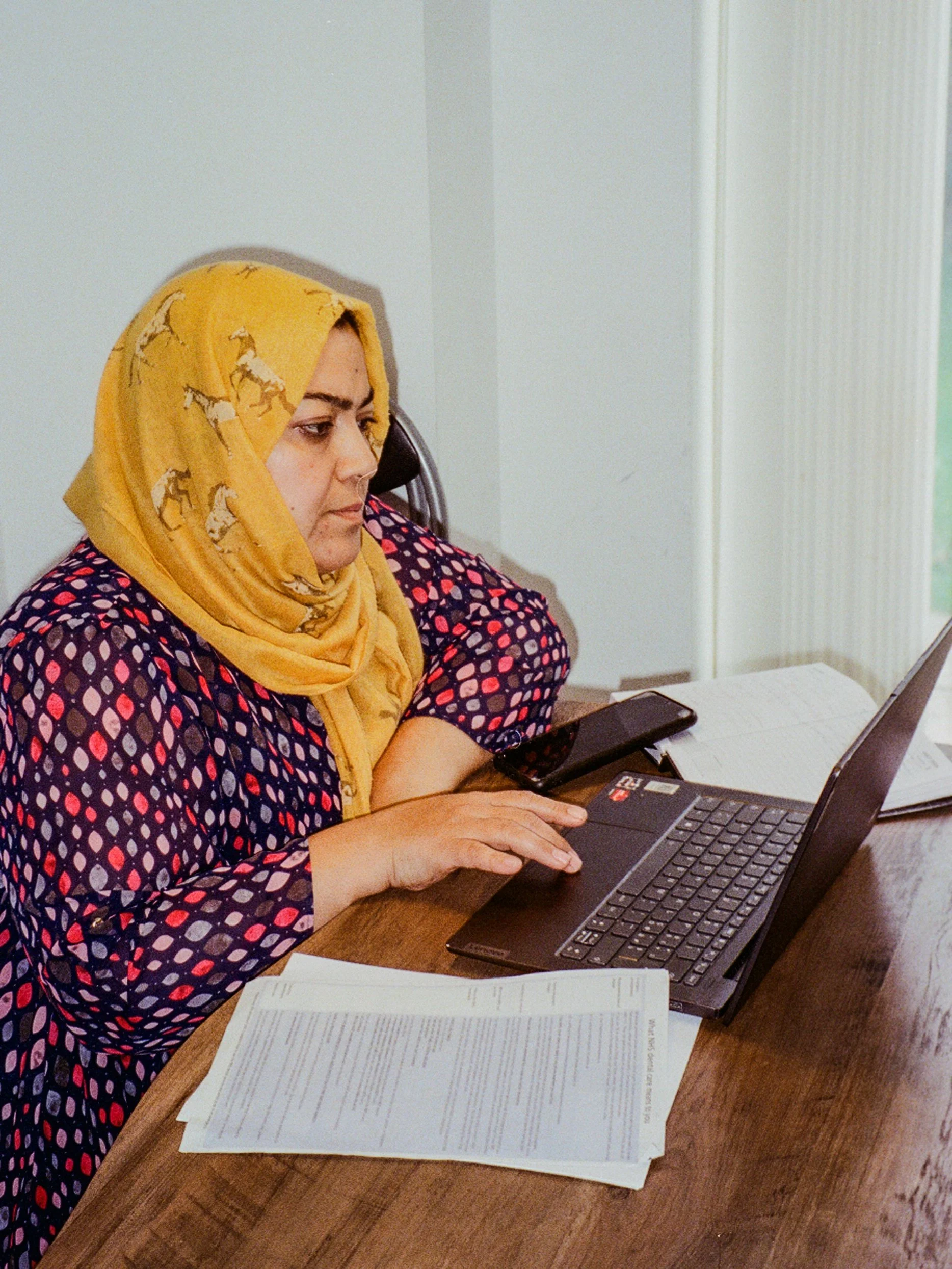
As a trusted therapist, nearly all the cases Batool receives come to her through referrals from human rights organisations.
Most sessions occur one-to-one, though occasionally, Batool will offer group therapy as a way to build community and offer a rare sense of solidarity in an otherwise isolating reality.
Nilofar* began her journey to treat her depression with regular individual sessions. Not noticing the desired results, Batool invited her to join a group session with others experiencing similar symptoms. The impact was immediate - surrounded by peers who voiced the same fears and emotional struggles, Nilofar realised she was not isolated in her pain. Over time, Batool has seen her sense of belonging grow, marking the first step in her journey towards healing.
The long-term psychological impact of forced isolation is a pressing concern for Batool. Since the Taliban’s decree to ban girls from high school and public life, all hopes for socialisation have been plunged into darkness. “Personality development requires peers,” Batool tells me. “It cannot happen in isolation.” Yet isolation is now the defining feature of girlhood in Afghanistan.
Teenagers who once found companionship in the mundane rituals of school life - chatting between classes, confiding in friends, or debating peers - are now isolated within the walls of their homes. Without these interactions, Batool warns that an entire generation risks entering adulthood with unfinished personalities, lacking the social tools needed for relationships, employment, or civic participation.
The consequences are already emerging, as Batool reflects: “In Afghanistan, depression amongst girls is high, anxiety is high, and their hopes for the future are under-zero.”
Online courses, often touted as effective alternatives to in-person classes, provide little relief. Most are poorly structured and limited by physical and digital restrictions. Since women are prohibited from owning phones in Afghanistan, most classes are held on family-owned phones, nearly always belonging to a male relative: girls mute themselves when relatives enter the room; some sessions end abruptly without warning; others never begin because a father has taken the phone.
In almost all cases, privacy is impossible, and every word is monitored. “These are not classrooms,” Batool says. “They are surveillance spaces,” and girls must be careful to avoid sensitive topics like love, puberty, and reproductive health - topics once whispered about privately in school bathrooms, on walks home, and during sleepovers.
The loss of these physical spaces has erased a critical refuge. Now, those conversations simply do not happen. Batool herself cannot raise them - if a family suspects such topics are being discussed, the session is immediately terminated.
Batool describes the current situation as a “slow poison” - not an immediate catastrophe, but a gradual erosion of emotional capacity, social awareness, and hope. The worst of this long-term damage can be observed unfolding quietly in the minds of the youngest generation in Afghanistan.
Under a regime that has erased women from public life, gender restrictions and hierarchies are slowly becoming normalised. Young boys grow up without seeing a single woman on the streets, absorbing this absence as part of the natural social order. Girls, once devastated by their exclusion from school, no longer cry in Batool’s sessions; the youngest of them, raised in the light of the Taliban’s propaganda, defend the regime, insisting that the Taliban “keeps us safe in the streets.”
This psychological shift - what journalist Lynne O’Donnell has termed “Kabul Syndrome” - threatens to entrench inequality across generations, not through force alone, but through the slow acceptance of social deprivation. Batool worries that children raised in this environment will enter adulthood without the tools or will to imagine a different Afghanistan, making any future recovery far more difficult and costly than rebuilding institutions.
Batool sees her work as critically important in this regard; she is not only treating trauma but rather attempting to build futures in an environment that actively prevents them. Yet each session comes with challenges of its own.
Internet cuts and shortages are common in the country, whether due to poor infrastructure or government-imposed bans; in September 2025, the Taliban imposed a 48-hour nationwide internet and telecommunications blackout, citing concerns over “immorality.”
But the biggest obstacle is the lack of privacy. Without phones of their own, female patients rely on borrowing the devices of male relatives for virtual therapy sessions. Combined with a lack of private spaces at home, girls are often forced to conduct sessions under the supervision of family members, and this constant surveillance and monitoring limits both the conversation and the therapy’s effectiveness.
Batool shares story of a young girl named Maryam* who came to her for help with managing anxiety. Normally, such cases are commonplace and don’t pose any issues - but Maryam’s was different. During what started as a routine individual therapy call on WhatsApp, Batool received a message from the girl on their private chat: “Please help me.” The message was then quickly deleted.
Maryam’s father had recently lost his job, and with no other male providers of age in their family, the family was forced to relocate to her brother-in-law’s house. One night, while her family slept, Maryam brother-in-law coerced her into entering his room and touching his body. Over time, his demands grew. Eventually, Maryam requested therapy, claiming anxiety as a cover to ask for help. And yet, without a phone of her own, she was forced to conduct these sessions on her brother-in-law’s phone, often while he was in the room.
Situations like these demonstrate the difficulty of offering remote therapy to girls in Afghanistan. In Maryam’s case, Batool arranged for a dual-conversation strategy, whereby one would maintain a superficial conversation while the other texted their thoughts privately. Any messages sent during the call were deleted before ending the session. In the weeks following, Maryam tried many options to keep herself safe, including sharing a bed with her sister at night. In the end, still a young child, she entered an arranged marriage with an older man who was looking for a second wife, knowing that her new husband would be able to provide a good life for both herself and her family.
In their last session together, Maryam told Batool, “This is the first way I saved my life. I couldn't tell you the whole story of what was happening in my brother-in-law’s house, but it was not safe for me. I wanted to marry this old man for my own safety. Things are better for me now. I have a safe home, I have food and a roof over my head.” To protect herself and her family, Maryam sacrificed not only her therapy but also her education; now that she is married, her duties lie with her husband and new family. It is a sacrifice many girls in Afghanistan are forced to make.
Nonetheless, Batool considers Maryam’s case a success story. She is not always so lucky. A few months ago, Batool recognised the face of one of her patients in the national news after the girl had committed suicide. Her face is contorted with anguish as she tells me this story: “What did I do? She asked me please help me, please help me, but what can I do? What can I do?” As an asylum seeker living 5,000 miles away, Batool is limited in her capacity to help, and there are no authorities to turn to in Afghanistan to help the girl.
Here, Batool must remember the limits of her practice. “There are only so many girls I can save,” Batool says, and the reality is that suicide rates amongst girls in Afghanistan are high and rising. “In most of these cases, we cannot help them,” she says.
Stories like these indicate the challenges that affect not only the patients but also the therapists. For her part, Batool works alone. She has no superior whom she can turn to for advice, nor a professional community to lean on for emotional support. Without that support system in place, Batool has for the first time in her life started smoking, a way to cope with the emotional distress of her work.
And yet, despite the pleas of her family, Batool tells me that she cannot stop her work: “The girls in Afghanistan trust me and rely on me. These sessions are the only lifeline they have. For five years, I have not been for myself. I have forgotten myself. And I have no way to help myself when I need it.”
Batool’s story highlights the precarious state of Afghanistan’s mental health system. Deprived of resources, restricted by Taliban controls, and unable to pay for treatment themselves, Afghan men, women, and children have become all but reliant on the goodwill of exiled professionals like Batool, who volunteer their time to provide counselling services from halfway across the world.